|
A Leader in Tape Maintenance and Hard Drive Destruction Equipment |
|
|
Model
CD1200A |
|
|
|
FEATURES
|

|
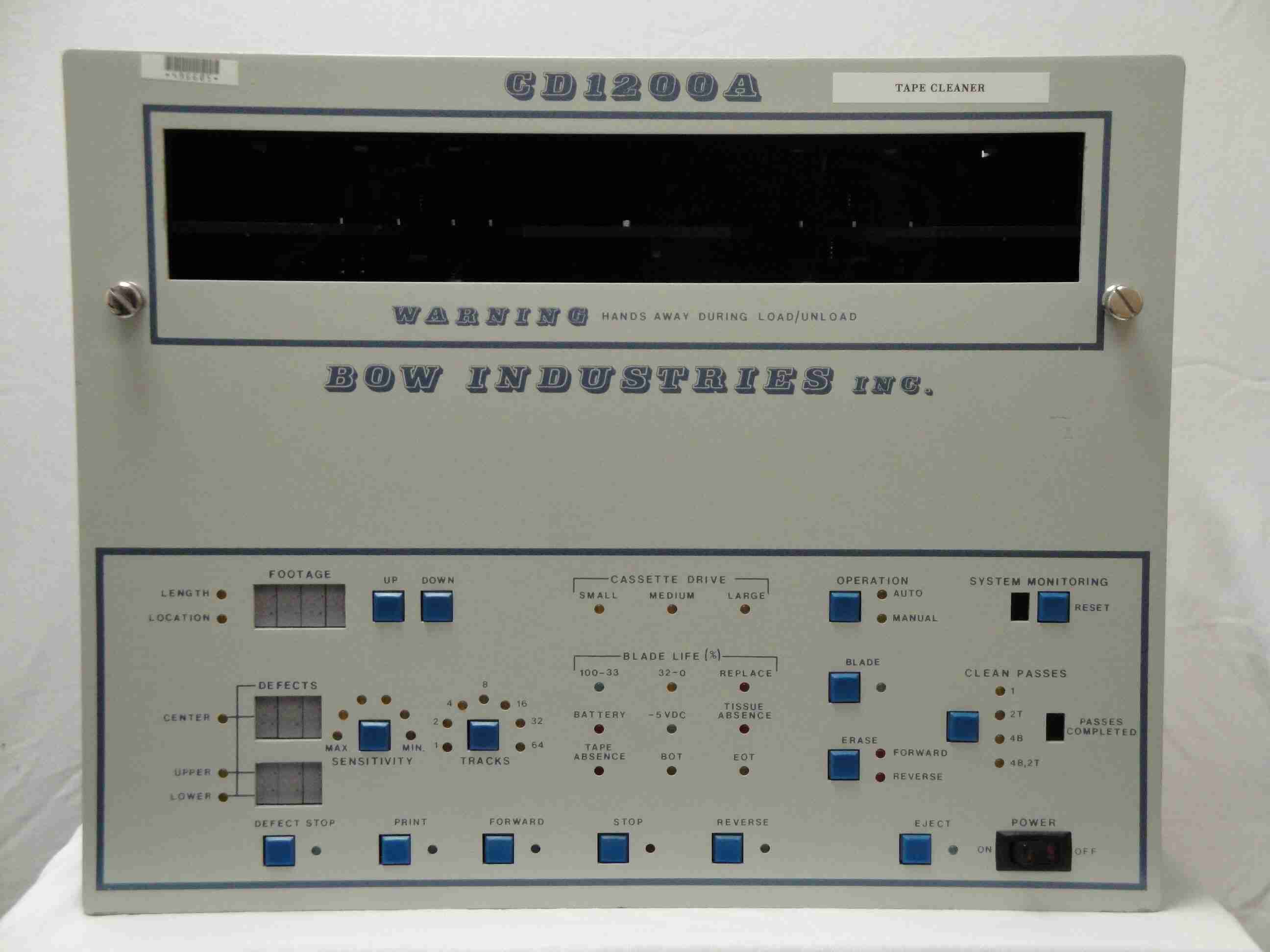
The CD1200A is the
first device to provide truly effective cleaning, gentle handling and optical
inspection for D1 & D2 (19 mm) high-density digital cassettes, using basic
time proven cleaning principles that have been the hallmark of BOW's commitment
to quality tape care. CLEANING TAPE PATH ACTIVE GUIDING FRONT PANEL AND ACCESS PANEL The
tissue spools and sapphire cleaning blade are easily accessible through a top
access door. OPTICAL INSPECTOR The
optical inspector is a reflective device that looks for physical damage such as
folds, creases, scratches, and oxide 'nicks' along the helical or transverse
scan line. By placing the sensors along the helical or transverse scan line, we
can simulate the potential loss of data under recording conditions. User
adjustable sensitivity controls allow the operator to change the length of the
'lost' scan line and the number of scan lines from 1 to 64. Defects are
registered as Center Defect and Upper/Lower Edge Defects. After the tape has
been cleaned and inspected, an UP/DOWN scan feature, which works in conjunction
with a footage counter, locates the footage at which the defects occurred. This
information can be displayed or printed out for review. A
Stop on Defect (SD) option, which works in conjunction with the optical
inspector, can also be added that will allow the operator to stop the tape at a
defect location and view the physical defect in the cassette window. With
a fast operating speed of 200 ips (inches per second), gentle tape handling,
precise cleaning and optical inspection, the Model CD1200A is the choice for
maintaining your D1 and D2 digital cassette tape library |
|
Specifications |
|
|
Physical Characteristics |
|
|
Dimensions |
17.63" (448 mm) W x 14.50" (368 mm) H x 20" (508 mm) D |
|
Weight |
80 lbs. (approx.), Shipping weight: 135 lbs. (approx.) |
|
Operating Environment |
|
|
Temperature Range |
12° C to 27° C |
|
Humidity Range |
30% to 70% non-condensing |
|
Altitude |
7,500 feet |
|
Warranty |
90 days, part & labor – Return to factory |
|
Power |
110 or 220 VAC, 48 to 62 Hz, single phase power source |
Available Options |
|
| AA | Audible Alarm (Indicates end of Cleaning Tissue and Eject) |
| RM | Rackmount Kit |
| C | RS232 Serial Printer Interface |
| SD | Stop on Defect |
| P | Serial Printer (Table top for use with C option) |
|
Manufactured and Sold by |